 Radio News Network Radio News Network
Karachi – In a high-stakes huddle at the Chief Minister’s House, Sindh Chief Minister Syed Murad Ali Shah and Federal Climate Minister Dr. Musadik Malik pushed ahead with a blueprint, cleared by the federal cabinet last week, for a 300-day Climate Action Plan aimed at bracing for a monsoon season expected to arrive 15 days early next year.
Flanked by top bureaucrats, the duo pledged a revamped weather forecasting system, a cross-provincial working group under Sindh Chief Secretary Asif Hyder Shah to draft the plan in two weeks, and federal backing for carbon credit markets—moves hailed as proactive shields against the climate fury that has already claimed over 900 lives and displaced 4.2 million since June’s deluge.
Yet, as floodwaters still lap at Punjab’s canal colonies and threaten Sindh’s riverine belts, the plan’s core—upgrading Sukkur Barrage, fortifying Indus embankments, and patching old waterways—reeks more of reactive engineering than true adaptation, perpetuating a colonial hydraulic stranglehold that experts say is dooming Pakistan to endless cycles of devastation.
The meeting’s nod to global support and carbon credits paints a forward-looking picture: Malik promised full federal aid for provincial green markets, while Shah touted Sindh’s nascent efforts to monetize emissions reductions. All four provinces will pitch projects under the plan, with modernized alerts and early prep framed as damage-cutters against heavy rains and riverine floods. “Pakistan is facing severe losses due to climate change,” they agreed, urging international lifelines to blunt the blow. It’s a timely pivot—Prime Minister Shehbaz Sharif’s broader directive for a 300-day resilience roadmap, issued amid the crisis, aims to curb next year’s monsoon and glacial melt risks through home-grown fixes.
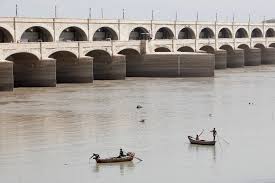
But drill down, and the devil’s in the dams. Shah zeroed in on Sukkur Barrage, the 1932 behemoth whose design handled 1.5 million cusecs but now limps at 960,000 due to silt-clogged gates and hydraulic woes—exacerbated by this year’s floods that saw Guddu and Sukkur inflows spike to over 500,000 cusecs, overwhelming downstream defenses. “We must enhance its capacity,” he urged, while flagging fragile Indus embankments—Japan-funded reinforcements for KK Bund and Qadirpur-Shahnik Bund notwithstanding—and pleading for federal help to revive pre-barrage natural waterways lost to the 1930s “Katcha” riverine zones. Malik assured cooperation, but this barrage-boost-and-embankment frenzy is straight from the elite’s irrigated playbook: a hydraulic fix that cages the Indus’s braided floodplains, blocking the sediment spread and aquifer recharge that could turn floods into ecosystem healers.
It’s adaptation in name only—more “something else,” as critics might quip: a band-aid on a system rigged for feudal profit over flood-friendly farming. The Indus, starved of its natural meanders by colonial controls, yearns to flood productively—depositing silt for recession agriculture on enriched soils, recharging groundwater for low-water crops, and mending the soil salinization wrecked by commercial monocrops. Yet here we are, post-2022’s $30 billion wake-up, still chasing barrage upgrades amid silt traps that have slashed storage by 30% and fueled this year’s toxic stagnation in Punjab’s canal colonies, where rotting crops marinated in sewage and chemicals. Shah’s waterway restoration talk teases a glimpse of sense—reviving Dhoro Puran in 2024 was a nod to natural flows—but without ditching the dam obsession, it’s lipstick on a concrete pig.
This dynastic duo—Shah of the PPP landed legacy, Malik under Sharif’s PML-N umbrella—embodies the inertia: compensation mantras for elite estates, donor appeals for “global support,” and fiscal squeezes on the masses to fund it all, even as lawmakers’ salaries ballooned 500-fold amid fertilizer spikes and agricultural slumps. The 300-day plan could pivot if it channels Taxonomy-vetted funds to aquifer pilots like WWF’s Recharge Pakistan or Sindh recession trials—models from Bangladesh show floods feeding millions without mega-works. But with Sukkur’s gates as the star, expect more caging than embracing. As the next monsoon looms early, Pakistan’s real test isn’t capacity—it’s courage to let the river run free.