 Radio News Network Radio News Network
Dr. Hassan Abbas
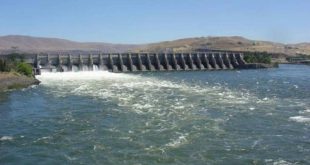
In Pakistan, floods are often explained away with a simple refrain: if only we had more dams. The assumption is that floods are essentially a storage problem, and that greater river regulation would make the country safer and more prosperous. This belief, however, rests on a misunderstanding of how river systems work—and of what causes floods in the Indus Basin.
A few numbers help put the issue in perspective. The Indus Basin system—commonly referred to as the five rivers—carries an average annual flow of around 180 billion cubic metres (bcm). Nearly three-quarters of this volume arrives during the monsoon months, often in short and intense bursts. Against this scale, Pakistan’s total large-scale storage capacity is modest. Tarbela can store about 12 bcm, Mangla 7 bcm, and all other smaller reservoirs combined add roughly 3 bcm. Even if the long-debated Kalabagh Dam were built, it would contribute only another 6 bcm. In other words, Pakistan faces monsoon flows of roughly 135 bcm, while its reservoirs together can absorb barely a fraction of that volume.
Once these reservoirs are filled, the river resumes its natural course with full force. Dams, therefore, cannot “stop” floods; at best, they delay a small portion of floodwater for a limited period. History bears this out. In 1992, for example, floods released downstream of Mangla caused more than a thousand deaths and affected millions, despite the presence of major storage infrastructure. Storage alone, then, cannot stand in the way of basin-scale flooding.
This mismatch between river flows and storage capacity is compounded by another problem: sedimentation. Large dams in the Indus Basin steadily lose storage as they fill with silt, reducing their effectiveness over time. After a few decades, reservoirs no longer perform as originally designed, further weakening the argument that dams offer a long-term solution to flooding.
More fundamentally, Pakistan’s flood vulnerability is the outcome of a deeper shift in how the rivers have been treated. Historically, civilizations in the Indus region evolved around flowing waters, seasonal inundation, and active floodplains. Modern development reversed this relationship. Armed with engineering, technology, and borrowed capital, planners attempted to force rivers to conform to fixed human designs. The construction of dams, diversion barrages, embankments, link canals, and flood protection dykes sought to tame rivers that had followed dynamic courses for millions of years.
This approach has not only failed to eliminate floods; it has often intensified their impacts. Dams and barrages divert water away from wetlands, marshes, riverine forests, and groundwater-dependent ecosystems—natural systems that function like sponges. During heavy rains, these ecosystems absorb excess water, slow down flows, and release moisture gradually during dry periods. Most importantly, they flatten flood peaks, reducing the destructive power of sudden surges.
When these ecosystems are drained and cut off, the river basin loses its natural buffering capacity. In the short term, drying out floodplains appears economically attractive, as land is brought under cultivation or urban use. Protected by embankments, people build homes and infrastructure in areas that were once part of the river’s natural domain. Over time, however, this false sense of security proves costly. Barrages accelerate silt deposition within river channels, raising riverbeds and shrinking their capacity to carry water. As a result, even floods that fall within the original design limits of engineered structures increasingly spill over embankments.
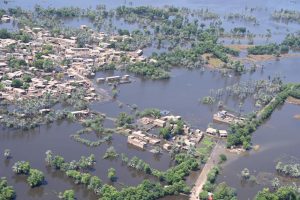
This explains why similar magnitudes of flooding have produced vastly different outcomes over time. Flood events that the river system accommodated in earlier decades now trigger breaches, avulsions, and widespread devastation—most visibly in Sindh, where the Indus has repeatedly sought new paths during recent floods.
In effect, Pakistan has not eliminated floods; it has redistributed risk. Poor communities in arid regions suffer when engineered systems fail to deliver promised irrigation supplies, while others now find themselves living in dried wetlands, abandoned river channels, and active floodplains—areas that inevitably reclaim water when the monsoon arrives. What are labeled as “floods” are often simply rivers following their natural gradients through landscapes that no longer have space to receive them.
The idea that floods can be fought and controlled by reshaping natural systems is increasingly regarded as outdated. Leading water scholars now argue for a transition from a “change–fight–control” mindset toward one that emphasizes “conform–adapt–manage.” This means working with rivers rather than against them, allowing space for seasonal flooding, and restoring the ecological functions that moderate extreme events.
Yet this shift presents a difficult dilemma. Pakistan already diverts nearly all available river water into agriculture, and still faces growing demand. Restoring wetlands, floodplains, and riverine forests would indeed require allowing more water to remain in the river system. This is often portrayed as a direct threat to food security and the agrarian economy. In reality, this perception reflects not a physical scarcity of water, but the rigidity of an agricultural model built around excessive diversions, water-intensive crops, and inefficient irrigation practices. Pakistan already diverts nearly all available river flows into agriculture, yet struggles with low productivity, declining soil health, and mounting vulnerability to floods and droughts.
The real challenge, therefore, is not choosing between rivers and food, but between continuing an unsustainable agrarian model and transitioning to one that aligns with the basin’s ecological limits. Rethinking crop choices, land use, and water governance—rather than expanding large engineering structures—offers a pathway to maintain food security while restoring the river’s natural capacity to moderate floods. In this sense, putting water back into the river is not a threat to agriculture; it is a prerequisite for its long-term resilience.
Floods in Pakistan are not a failure of nature, nor simply a lack of dams. They are the cumulative result of decisions that prioritized control over adaptation, and infrastructure over ecology. Until this underlying logic changes, no number of dams will make the country flood-proof.
— The writer is expert in hydrology and water resource management.