 Radio News Network Radio News Network
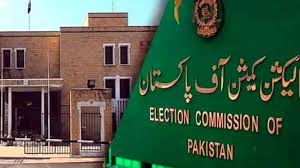
ISLAMABAD: In a disheartening twist that underscores Pakistan’s chronic battle with devolved governance, the federal government’s promulgation of a new presidential ordinance has torpedoed the Election Commission of Pakistan’s (ECP) painstakingly laid schedule for local government elections in the Islamabad Capital Territory (ICT). Announced just weeks before the February 15, 2026, polling day—now rendered obsolete—this move has plunged the capital into yet another abyss of administrative limbo, extending a five-year void without elected representatives and igniting fresh accusations of deliberate sabotage.
The optics are damning: a federal executive flexing ordinance powers to rewrite local rules on the eve of ballots, flouting a June 2025 Islamabad High Court (IHC) ruling that mandated polls under the ICT Local Government Act, 2015. The court’s verdict, delivered amid mounting petitions, lambasted repeated legislative tinkering as a ploy to “frustrate the constitutional right” to grassroots elections, emphasizing Article 140-A’s devolution imperatives for political, administrative, and financial autonomy. Undeterred, the ECP had pressed forward post-ruling, finalizing delimitations after five exhaustive revisions and thrice-issued schedules. Its December 2025 notification—broadcast on social media—outlined a crisp timeline: nominations from December 19, scrutiny through January 3, appeals until January 13, withdrawals by January 15, and symbol allotments leading to February 15’s 8 a.m. to 4 p.m. vote. The commission vowed “honest, just” proceedings, freezing official transfers, barring high-profile campaigning by the president, prime minister, and ministers, and prohibiting state resource misuse to tilt outcomes.
Yet, the ordinance—promulgated stealthily without stakeholder consultation—has upended it all. By abolishing the Metropolitan Corporation Islamabad (MCI) and erecting a three-township edifice mirroring National Assembly constituencies, it invalidates prior boundaries, necessitating fresh demarcations that could drag polls into indefinite postponement. This mega-structure supplants neighbourhood-centric union councils with bloated town corporations of about 52 members each, diluting hyper-local representation in favor of MNA-aligned fiefdoms. Critics, including civil society coalitions, decry it as a centralization coup, eroding democratic fibbers and breeding corruption through unaccountable bureaucracies.
The overhaul’s barbs run deeper. Mayoral and deputy mayoral elections morph from direct public mandates to opaque, indirect mechanisms, severing leaders from voter scrutiny. Reserved seats—vital for inclusivity—plummet: a mere four per town for women (roughly 8% of total), alongside slashed quotas for labourers and marginalized groups, signalling systemic sidelining of the vulnerable. Most alarmingly, it vests “sweeping” executive reins—over services, urban planning, and budgets—in unelected administrators, tenure-free and oversight-light, morphing elected aspirations into bureaucratic fiefdoms.
Political fallout is swift and sharp. Pakistan Tehreek-i-Insaf (PTI branded it the government’s fourth poll-dodging gambit, timed to exploit ECP’s near-readiness. “This is sabotage,” he thundered, echoing the party’s broader narrative of electoral throttling. Civil society joint statement amplifies the chorus: the secretive amendments foster a “more centralised, less democratic” regime, prone to graft and elite capture. Legal eagles spotlight the ordinance vortex—frequent executive edicts resetting clocks via “fresh” delimitations—as a constitutional sleight-of-hand, perpetuating uncertainty since the 2021 term expiry.
Islamabad’s 1.2 million residents, from diplomats’ enclaves to working-class bazaars, bear the brunt: unheeded woes in waste, water, and wards persist, courtesy of unelected proxies. As January 15’s withdrawal deadline evaporates into irrelevance, the ECP faces a reckoning—will it challenge the ordinance in court, or acquiesce to delay? For a capital meant to embody federal equity, this derailment isn’t mere logistics; it’s a stark tableau of devolution’s fragility, where grassroots dreams yield to executive whims. With Article 140-A’s guarantees in tatters, the fight for local sovereignty endures, but optimism wanes in the winter chill.