 Radio News Network Radio News Network
ISLAMABAD – The Islamabad High Court (IHC) on Thursday imposed an immediate injunction barring the Capital Development Authority (CDA) from further tree-cutting across the federal capital until February 2, while demanding a “para-wise” report on the ongoing controversy that has seen over 29,115 trees felled since late 2025. Justice Khadim Hussain Soomro’s directive, issued during a petition by Muhammad Naveed Ahmad of the Centre for Justice and Rights, cites alleged breaches of the Pakistan Environmental Protection Act (PEPA) 1997, Islamabad Wildlife Ordinance 1979, and the city’s Master Plan, which safeguards Shakarparian as a protected green zone.
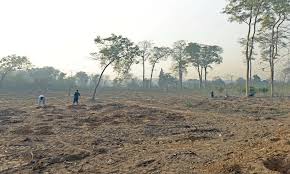
Petition counsel Muddasir Latif Abbasi detailed “indiscriminate” removals in key areas like Shakarparian (8,700 trees), F-9 Park (12,000), H-8 Expressway, Chak Shahzad, and Park Road greenbelts, arguing they pose “grave and irreversible” risks to public health, ecology, and urban resilience. The CDA has defended the actions as targeting invasive paper mulberry trees—implicated in pollen-induced allergies and respiratory issues, per a 2023 Supreme Court order—but critics, including environmental NGOs, decry a lack of transparency and mandatory Environmental Impact Assessments (EIAs).
WWF-Pakistan has emerged as a vocal critic, releasing a scathing January 13 report that disputes the CDA’s “allergy-only” narrative and exposes links to infrastructure projects. Titled “Beyond Pollen and Allergies: Unpacking Islamabad’s Tree Removal Drive,” the document documents extensive land-clearing from December 2025 to mid-January 2026, including native species like shisham axed for developments such as the H-8 Monument Park, a proposed cricket stadium, convention center, and DHA-CDA housing schemes. “While pollen mitigation is valid, the scale and sites suggest selective clearing for urban expansion,” states the report, estimating a net loss of five hectares of canopy and warning of cascading effects: heightened urban heat islands, soil erosion, biodiversity collapse, and disrupted groundwater recharge.
WWF-Pakistan Executive Director Hammad Aftab emphasized the ecological peril in a statement: “Urban forests are Islamabad’s lungs—critical for carbon sequestration, flood mitigation, and mental well-being. This drive risks turning our ‘Garden City’ into a concrete sprawl.” The NGO slams the absence of public consultations and phased replanting, urging a 5:1 native tree replacement ratio and independent audits. On Instagram, WWF called for public action: “Plant a native tree today—jacaranda, amaltas, or sukh chain. Join us in reclaiming green spaces.” They pledge “constructive engagement” with authorities but demand accountability, including halting projects without EIAs.
Environmental experts echo WWF’s concerns. Climate advocate Dr. Zainab Naeem labeled it “mismanaged devastation,” while hydrologist Dr. Hassan Abbas highlighted threats to rainfall patterns and aquifer health. The fallout has ignited viral outrage, with Prime Minister Shehbaz Sharif ordering a federal probe and Minister of State for Interior Tallal Chaudhry vowing 40,000 new plantings—three natives per mulberry—in 2026.
The petition presses for high-level CDA accountability, a judicial commission probe, and moratoriums on H-8 and other builds until oversight. Notices were issued to CDA, Pak-EPA, and the Climate Change Ministry. As February 2 looms, this could catalyze stricter green governance, pitting health imperatives against sustainable development.