 Radio News Network Radio News Network
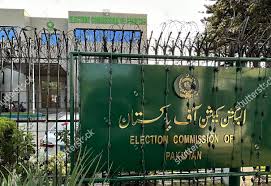
ISLAMABAD: In a momentous step toward revitalizing grassroots democracy, the Election Commission of Pakistan (ECP) on Tuesday, December 9, 2025, finally unveiled the long-pending schedule for local government elections in the Islamabad Capital Territory (ICT). This announcement, echoing through the corridors of power and the bustling streets of the federal capital, marks the end of a torturous five-year delay that has left residents without elected representatives, governance in administrative limbo, and public trust frayed at the edges. As the winter sun cast a crisp glow over the Margalla Hills, the ECP’s notification—shared via social media and official channels—served as a clarion call: it’s time for Islamabad’s 1.2 million voters to reclaim their voice in shaping the city’s daily life, from pothole repairs to park maintenance.
The optics of this delay paints a stark picture of systemic inertia in Pakistan’s devolution experiment. The previous local government, elected in a resounding victory by the Pakistan Muslim League-Nawaz (PML-N) in November 2015—securing 50 of the 77 general seats—saw its five-year term expire on February 14, 2021. What followed was a cascade of excuses and encroachments: “new legislation” under the Islamabad Capital Territory Local Government Act, 2015 amendments, relentless legal challenges in the Islamabad High Court (IHC), and repeated government foot-dragging.
The ECP, in a November 2025 directive, voiced “extraordinary concern” over this paralysis, noting that delimitation had been redone five times and schedules issued thrice, only to be scuttled. Petitions flooded courts, with Justice Mohsin Akhtar Kayani slamming the “paralysis of the system” in November hearings, reserving verdicts that underscored the erosion of local autonomy. Political analysts argue this vacuum not only stifled municipal services—leading to unaddressed complaints about waste management and urban planning—but also fueled perceptions of elite capture, where unelected administrators wielded unchecked power, blurring the lines between federal oversight and democratic neglect.
Against this backdrop, the ECP’s meticulously crafted timeline injects a sense of urgency and structure, spanning from preparatory notices to result declarations in a bid to restore procedural sanctity. Returning officers (ROs) will issue public notices inviting nominations on December 19, kicking off a frenzy of political manoeuvring. Aspiring candidates have until December 22-27 (barring the solemn pause for Quaid-i-Azam Day on December 25) to file papers, a window that could see a mosaic of independents, party loyalists, and civil society figures vying for the 125 union council seats—96 general, 29 reserved for women and non-Muslims. Scrutiny of nominations unfolds from December 30 to January 3, 2026, promising rigorous vetting to weed out ineligible contenders. Appeals against RO decisions can be lodged January 5-8, with appellate tribunals deliberating swiftly until January 13, culminating in a revised candidate roster on the 14th.
The rhythm accelerates post-January 15, the cutoff for withdrawals, when election symbols—those iconic emblems like the tiger or arrow—will be allotted, evoking memories of past campaigns’ vibrant rallies. Polling day arrives on Sunday, February 15, 2026, a full 29 days later, under clear skies if the weather holds, with booths buzzing from 8 a.m. to 4 p.m. Results consolidation follows February 16-19, aiming for transparency in an era scarred by digital-age scepticism.
But the ECP’s missive transcends logistics; it is a manifesto for electoral purity, laced with stern directives to safeguard the process’s optics—ensuring it appears, and is, untainted by influence. Voters are urged to elect representatives “honestly, justly, fairly,” with zero tolerance for corrupt practices. Federal authorities are barred from unveiling development projects or deploying state resources to tilt the scales toward favoured candidates—a direct jab at past allegations of patronage politics. Government servants risk legal repercussions for leveraging official positions, while a freeze on transfers, postings, and leaves for officials in Islamabad (sans ECP nod) prevents mid-game shuffling. High-profile figures—the president, prime minister, senators, assembly speakers, ministers, governors, chief ministers, and advisers—are sidelined from campaigning, a measure to level the playing field and mute the roar of incumbency. Notably, sitting assembly members and local councillors retain campaign rights, provided they toe the ECP’s code of conduct, balancing continuity with accountability.
Violators, the notification warns, face the full weight of law, a reminder that public office is no shield against electoral malfeasance. This framework not only addresses the delay’s scars—where unelected bodies managed a city of diplomats and dreamers—but also signals a broader reckoning for Pakistan’s local governance. In a nation where devolution under the 18th Amendment promised empowered localities, Islamabad’s polls could set a precedent, boosting civic engagement and service delivery. As nomination season dawns, the air thickens with anticipation: will this election heal the democratic deficit, or merely bandage it? For now, the ECP’s bold stroke offers hope, transforming a protracted shadow into a spotlight on participatory rule.