 Radio News Network Radio News Network
One-window promises ring hollow as SIFC’s 2023 pledge still leaves investors shuttling between desks.
ISLAMABAD – Governance failures have emerged as the single biggest roadblock holding back Pakistan’s industrial revival, with Chinese investors and local business leaders warning that bureaucratic quagmires, crippling utility costs, and credit starvation are choking off the very momentum the country desperately needs.
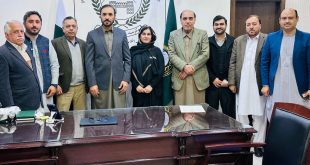
In a charged Monday meeting with Special Assistant to the Prime Minister (SAPM) on Industries Haroon Akhtar Khan, the Chinese ambassador and presidents of the Lahore and Gujranwala chambers turned up the heat, spelling out how systemic bottlenecks keep tripping up investment. “Ease of doing business is a myth when every file needs a push,” a source quoted one investor as saying. They singled out the Federal Board of Revenue’s (FBR) plan to roll out cameras in factories—meant to monitor production lines—as a privacy invasion that would scare off rather than draw in capital.
This isn’t a fresh grievance. Industrialists have been piling on the same complaints for years. In 2018, CPEC reviews flagged approval delays that stalled billions. By 2022, textile giants like APTMA called out circular debt and FBR overreach for grinding mills to a halt. Six Chinese firms dragged officials to the Sindh High Court in January 2025 over extortion and harassment. And during the PM’s September China visit, investors hammered home the need for policy stability—yet little has changed.
Bureaucracy Chokes Off FDI Dreams
Setting up a factory demands over 40 no-objection certificates (NOCs), with provincial and federal bodies often pulling in opposite directions. The Special Investment Facilitation Council (SIFC) promised one-window relief in 2023, but investors still shuttle between a dozen desks.
Industrial power tariffs hover at Rs 55–65 per unit—more than double China’s—while $1.8 billion in dues owed to CPEC power plants fuel uncertainty. Manufacturers warn they can’t compete when energy costs eat up 30–40% of expenses.
Despite SBP directives, banks demand 150–200% collateral. SMEs, the backbone of jobs, snag just 7% of total lending. Chinese investors with sovereign guarantees still wait months for financing.
Tiles makers and others shot down the camera scheme, insisting it treats producers like suspects. “We’re job creators, not tax dodgers,” one industrialist fumed.
Pakistan’s ease-of-doing-business ranking has slid from 108th (2020) to a projected 116th (2025). A new industrial policy remains on paper, with no legal teeth.
The SAPM vowed to iron out hurdles and roll out investor-friendly measures. But stakeholders are holding out for results, not rhetoric. As CPEC Phase 2 hangs in the balance, experts caution that unless governance bottlenecks are slashed—NOCs cut, tariffs stabilized, credit freed—Pakistan’s industrial revival will stay stuck in neutral.