 Radio News Network Radio News Network
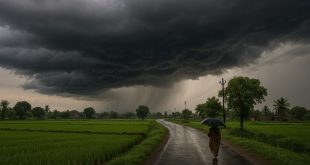
ISLAMABAD — An unprecedent 16-week deluge has ravaged the Indus basin, exposing colonial-era water systems’ failure to tame braided rivers. August rains, 5.2% above normal and surging 5% in early September, submerged over 4,100 villages in Pakistan’s Punjab, affecting 2.4 million and claiming 46 lives in the province.
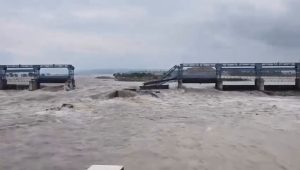
In Indian Punjab, irrigation dreams collapsed. The Ghaggar, once deemed dead, surged at 70,000 cusecs, breaching the Bhakra canal in Patiala with impacts felt down to Fazilka, flooding 65 villages and 148,000 hectares of rice, cotton, and sugarcane. Bhakra Dam, nearing 1,680 feet, released 95,435 cusecs, worsening Sutlej floods in Pakistan’s Vehari, submerging 7,000 acres and displacing 90,000. Colonial designs, built for shorter rains, now amplify destruction.
In Ludhiana, the Budha Darya, treated as a drain, roared with Sutlej backflows at 208,973 cusecs, spreading toxic sludge into colonies. Roads choked, streets turned black, and dyeing units, consuming 200 million liters daily, were shut. In Pakistan’s Sialkot, revived nullahs flooded fields, proving rivers defy confinement.
At Ahmadpur Sial, the Chenab, flowing at 444,754–558,683 cusecs, blocked the Ravi’s 157,065 cusecs, a colonial-forced confluence backfiring. Ravi waters, pushed back, tore through roads, canals, and settlements near Multan, flooding 4,100 villages as the river sought its ancient course. Failed relief cuts at Head Muhammadwala, with levels at 412 feet, submerged farmlands, showing braided rivers’ resistance.
In Sindh, the Indus races toward 900,000 cusecs, threatening 1.6 million. Outdated outfall drains risk reversing, flooding crops. Over 250,000 are displaced to relief camps; 1.5 million are affected in eastern Punjab. A Rajasthan low-pressure system fuels rains through September 10.
Pakistan’s toll is grim: 892 dead, 1,116 injured, 2.4 million displaced to 511 relief camps, and 6,180 livestock lost. In Punjab, 608 injuries and 1.75 lakh hectares of crops—rice, cotton, sugarcane—are ruined, threatening food security for 268 million. India’s Punjab reports 29 deaths, thousands rescued, and villages marooned.
Colonial canals and dykes, shaped by the 1960 Indus Waters Treaty, crumble under climate-driven rains and Himalayan melt (20–50% flow increase). Illegal mining and 7,000 hectares of floodplain encroachments clog floodways like the Ghaggar-Hakra, once sustaining 500+ Indus Valley sites. NDMA warns of rains through September 10 and a 2026 monsoon arriving two weeks earlier with 22% intensification, projecting 10–22% fiercer rains by 2030 and 11–20% flow scarcity post-2050 as glaciers shrink 65%.
The climate crisis highlights the potential revival of the Ghaggar–Hakra floodway, which could channel Sutlej overflows along the edge of the Thar. The lesson is stark: rivers cannot be tamed. South Asia must shift from control to adaptation—reviving natural corridors, adopting resilient crops, and fostering cross-border resilience—to meet the rivers’ relentless pulse.