 Radio News Network Radio News Network
With no foreign buyers in sight, Pakistan offloads idle power plants to its own defence-run entity — raising eyebrows over reform sincerity and elite capture.
RNN Report
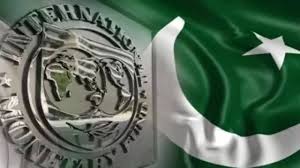
ISLAMABAD: In a curious twist to Pakistan’s privatisation saga, the federal government has sold 30 non-functional power plants to itself — via Wah Industries Limited, a subsidiary of the Ministry of Defence — for Rs38.255 billion. The move, cast as a reform milestone, is seen by critics as a cosmetic step taken to appease the IMF rather than restructure the bleeding power sector.
“These plants were dead weight,” said an official at the Power Division, requesting anonymity. “But instead of attracting foreign investment or reviving capacity, we just shuffled ownership from one state pocket to another.”
The assets belonged to three public sector generation companies — GENCO-I (Jamshoro), GENCO-II (Guddu), and GENCO-III (Muzaffargarh). Attempts to privatise these through the Privatisation Commission had failed to attract a single serious bid.
The government then pivoted to a G2G deal, tasking Generation Holding Company Limited — under a three-month deadline — to execute the sale. A senior official from the Ministry of Energy said, “Wah Industries offered the reserve price, and we couldn’t afford further delay. IMF deadlines were looming.”
Notably, the deal excludes the 415MW Guddu unit, which still functions. “We’ve had expressions of interest from a U.S. firm,” the official added, “and we’re exploring if refurbishment might fetch more value.”
Payment terms allow for either an upfront payment or staggered instalments. So far, only partial payments have been received. “Cash is expected, not guaranteed,” quipped an energy economist, “which tells you everything about the health of this transaction.”
Over 3,200 employees from the mothballed plants have been transferred to DISCOs, while 774 remain in limbo — a recurring theme in such sales. “No one is discussing the human cost of privatisation,” said an employee union representative. “We’re always the last to be considered and the first to suffer.”
The pattern is all too familiar. Privatisation efforts for Pakistan Steel Mills, PIA, and even the Roosevelt Hotel in New York have stalled, failed, or attracted legal entanglements. “Pakistan isn’t resisting privatisation,” said a policy analyst, “it’s resisting structural reform. That’s why foreign investors keep away.”
Nowhere is this more tragically evident than in the case of Radio Pakistan — once a national cultural pillar. Stripped of relevance, reeling under funding cuts, and facing partial asset sell-offs, its staff frequently go months without salaries. “It’s not just a broadcaster; it’s our memory and mirror,” said a former director. “Selling its land is like selling your last book to buy firewood.”
The irony is hard to ignore. While the government sells to itself under the IMF’s watchful eye, the real reforms — market competition, regulatory independence, and service delivery — remain elusive.
“Privatisation without reform is like painting over rot,” said an official at the Finance Ministry. “It looks good for the donors, but it collapses from within.”
For now, Pakistan appears to be selling state relics to itself — not to salvage value, but to delay the reckoning that real reform demands.