 Radio News Network Radio News Network
The country has cleared its first-ever Green Taxonomy, a framework designed to channel both domestic and international finance into climate-smart sectors

ISLAMABAD – The Economic Coordination Committee (ECC) of the federal cabinet has approved the Pakistan Green Taxonomy, a landmark framework designed to channel investment into climate-friendly projects. The decision, developed with World Bank support, marks a decisive turn in Pakistan’s economic strategy, moving away from an infrastructure-heavy model toward sustainable and inclusive growth.
Climate shocks push Pakistan towards green finance
The approval comes against the backdrop of mounting climate disasters that have kept battering the economy. The 2022 floods inflicted an estimated \$30 billion in damages and displaced 33 million people. In 2025, a fierce monsoon surge once again tore through farmland, destroying cash crops and forcing rural families to pick up the pieces. According to the Economic Survey 2024–25, agriculture grew by just 0.56 percent, the lowest in nine years, dragged down by major drops in cotton (-30.7%), wheat (-8.9%), maize (-15.4%), sugarcane (-3.9%) and rice (-1.4%). Policymakers argue the Green Taxonomy will help draw in international and domestic climate finance to protect livelihoods and shore up the economy against worsening risks.
A roadmap for sustainable investments
Officials describe the taxonomy as a financial guide that clearly sets out what counts as green economic activity. By spelling out standards, it helps banks, investors, and regulators sift through projects, separating genuine sustainability from “greenwashing.” The clarity, they insist, will not only build confidence in green financial products but also head off climate-related risks that could weigh down Pakistan’s financial system.
World Bank CPF signals pivot in growth strategy
The initiative is closely aligned with the World Bank’s Country Partnership Framework (CPF) for Pakistan, which pledges nearly $20 billion for 2022–2026. Unlike earlier strategies dominated by highways and dams, the CPF shifts emphasis toward climate-smart agriculture, disaster risk management, renewable energy, water conservation, and human capital. Analysts say the Green Taxonomy provides the financial scaffolding for this pivot, ensuring money gets channelled into priority sectors rather than outdated infrastructure.
Broad consultations shape consensus
The taxonomy was drawn up after months of consultations across ministries and stakeholder groups. Agencies ranging from Planning, Commerce, Industries, IT, and Aviation to civil society representatives had their say. Public validation sessions helped fine-tune the framework, giving it broad legitimacy as Pakistan’s flagship climate finance tool.
Strong signal to banks and global investors
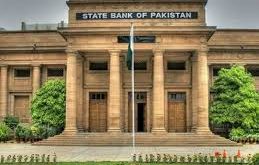
Currently, less than two percent of private bank credit in Pakistan flows into green projects, according to the State Bank. Analysts expect the taxonomy to help scale up that share by providing certainty to financial markets. Economists argue that the ECC’s approval sends a strong signal to domestic banks and global investors that Pakistan is serious about scaling up its green economy and falling in line with international sustainability standards. With inflation cooling to 12.5 percent in July 2025 and interest rates cut by half compared to last year, Islamabad views climate finance as a fresh growth engine that does not pile up unsustainable debt.
Future of Pakistan’s green transition
Observers caution that the real test lies in implementation. Effective monitoring, credible incentives, and tough regulation will be needed to turn the framework into live projects. Still, officials maintain that the taxonomy represents a decisive break with the past and a bold embrace of climate-conscious growth. As one policymaker summed it up: “This is not only about climate change. It is about retooling our economy to work for both people and the planet.”